
Brown Bull Marketing · 2026 Guide
Water Damage Restoration Marketing Guide for 2026
A practical guide to generating more restoration leads without becoming completely dependent on paid advertising.
This guide is based on what I have personally seen working with restoration companies across the country. It covers the marketing fundamentals I would focus on if I were trying to generate more water damage restoration leads myself.
Written by
Ben Rozansky
CEO, Brown Bull Marketing
Updated September 2026
Based on years of hands-on marketing experience with restoration companies across the U.S. and work tied to millions of dollars in restoration revenue.
The Big Picture
Restoration marketing is different.
A homeowner with water pouring through the ceiling usually isn't spending three weeks comparing contractors. They grab their phone, search Google, Google Maps, or an AI platform, and quickly decide who looks trustworthy enough to call.
That means your company has to do three things well: show up, look trustworthy, and answer the phone.
The mistake I see is jumping straight into paid lead generation before those basics are in place.
Where I Would Start
The restoration marketing priority order
If a restoration company had a limited budget and wanted to generate more inbound leads, this is generally the order I would prioritize.
01
Google Business Profile
Build it out completely, use real photos, keep your information accurate, and consistently generate new reviews.
02
Website + SEO
Create a professional website built around phone calls, your services, your service area, and the searches homeowners actually make.
03
Reviews + Referrals
Make reviews part of your process and consistently build relationships with plumbers, property managers, real estate professionals, and other local referral partners.
04
Google Local Services Ads
Use LSA to add paid lead volume once your Google presence and reputation are already strong.
05
Third-Party Leads
Test lead providers carefully. Results can vary dramatically by market, and the cost per legitimate opportunity can be high.
06
Google Ads
Google Ads still works, but restoration is competitive and campaigns can require meaningful spend and time before the economics make sense.
Foundation #1
Start with Google Business Profile and reviews
If you don't have a Google Business Profile, that is one of the first things I would fix. If you already have one, completely build it out and keep the information accurate.
Reviews should also become part of your normal job-completion process. Don't rely on someone in the office remembering to ask whenever they think about it.
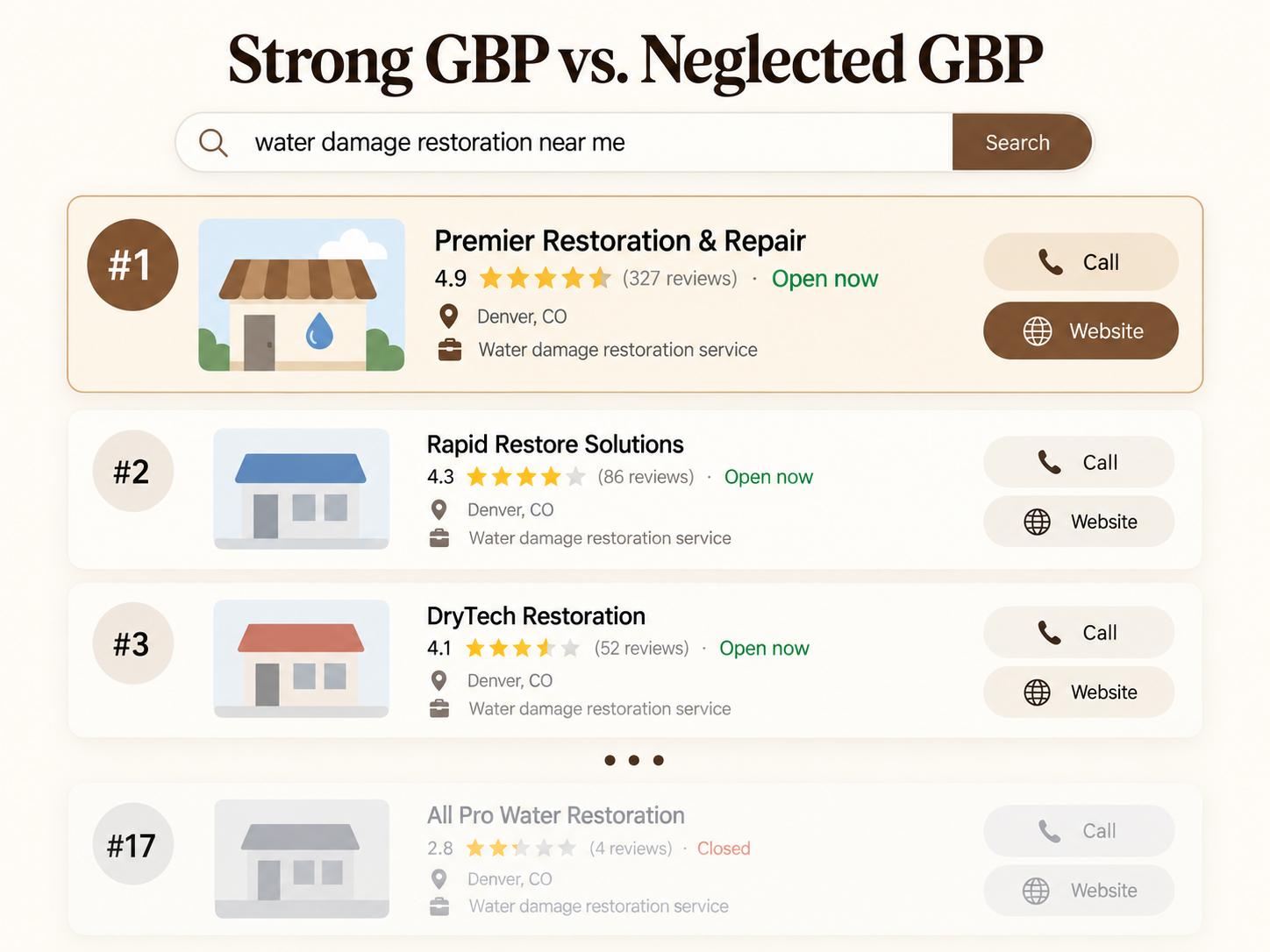
Total review count matters, but so does consistency. A competitor with fewer total reviews may still have a much healthier profile if they have been generating new reviews every week while yours has gone quiet.
Brown Bull Takeaway
Your Google Business Profile is one of the highest-ROI places to invest your time. Keep it updated, consistently follow up with completed customers for reviews, and treat it like a core lead-generation asset, not a profile you set up once and forget.
Foundation #2
Build a website designed to generate phone calls
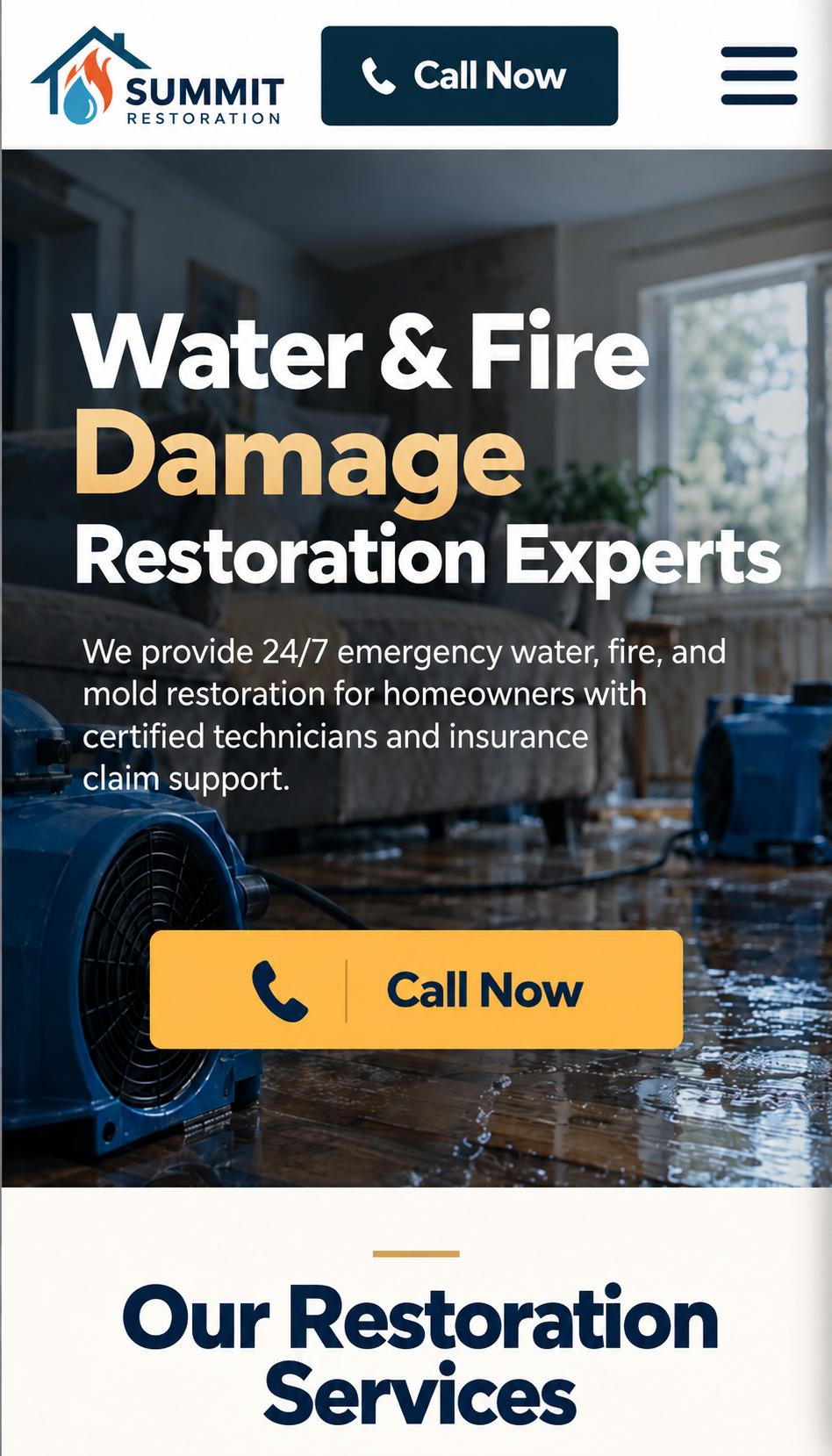
A restoration website should immediately explain what you do, where you work, why someone should trust you, and how to call you.
In restoration, I would usually rather have a homeowner call than fill out a generic contact form and wait for an email response. Make your phone number impossible to miss, especially on mobile.
Use real team, truck, equipment, and job-site photos whenever possible. They are much more credible than filling the site with generic stock photography or obviously AI-generated imagery.
The website should also contain useful pages for the services and areas you actually serve, supported by solid technical, on-page, and off-page SEO.
Lead Sources
Organic, referrals, and paid leads all behave differently
Organic
Google Business Profile, organic search, and AI search often produce some of the strongest opportunities because the homeowner researched their options and decided to call your company.
Referrals
Plumbers, property managers, real estate professionals, and other local partners can generate excellent jobs without requiring you to pay for every lead.
Paid Leads
Paid channels can add consistency and volume, but sometimes the homeowner barely knows your company when the call reaches you. Your intake and sales process have to earn the job.
Adding Volume
When to add LSA, third-party leads, and Google Ads
Google Local Services Ads
LSA can generate excellent restoration opportunities, but I prefer adding it after your Google presence, reputation, and intake process are already strong.
Third-Party Lead Providers
Companies such as 33 Mile Radius, Angi, Service Direct, and eLocal can work, but performance varies by market. Test carefully and judge them by legitimate opportunities and closed jobs — not simply call volume.
Google Ads
Google Ads still works. The problem is that restoration is highly competitive, clicks are expensive, and campaigns can require substantial spend before enough data accumulates to make good decisions.
Paid lead generation should add volume to a strong foundation — not become the foundation itself.
Measurement
Track high-quality leads — not raw phone calls
A phone call is not automatically a lead.
Imagine your Google Business Profile and website generated 57 calls last month. That sounds great until you discover half were spam, ten were people looking for jobs, and another ten were salespeople or referral partners.
You may have actually generated only ten legitimate restoration opportunities.
Those ten opportunities are much more useful than a report proudly showing 57 calls.
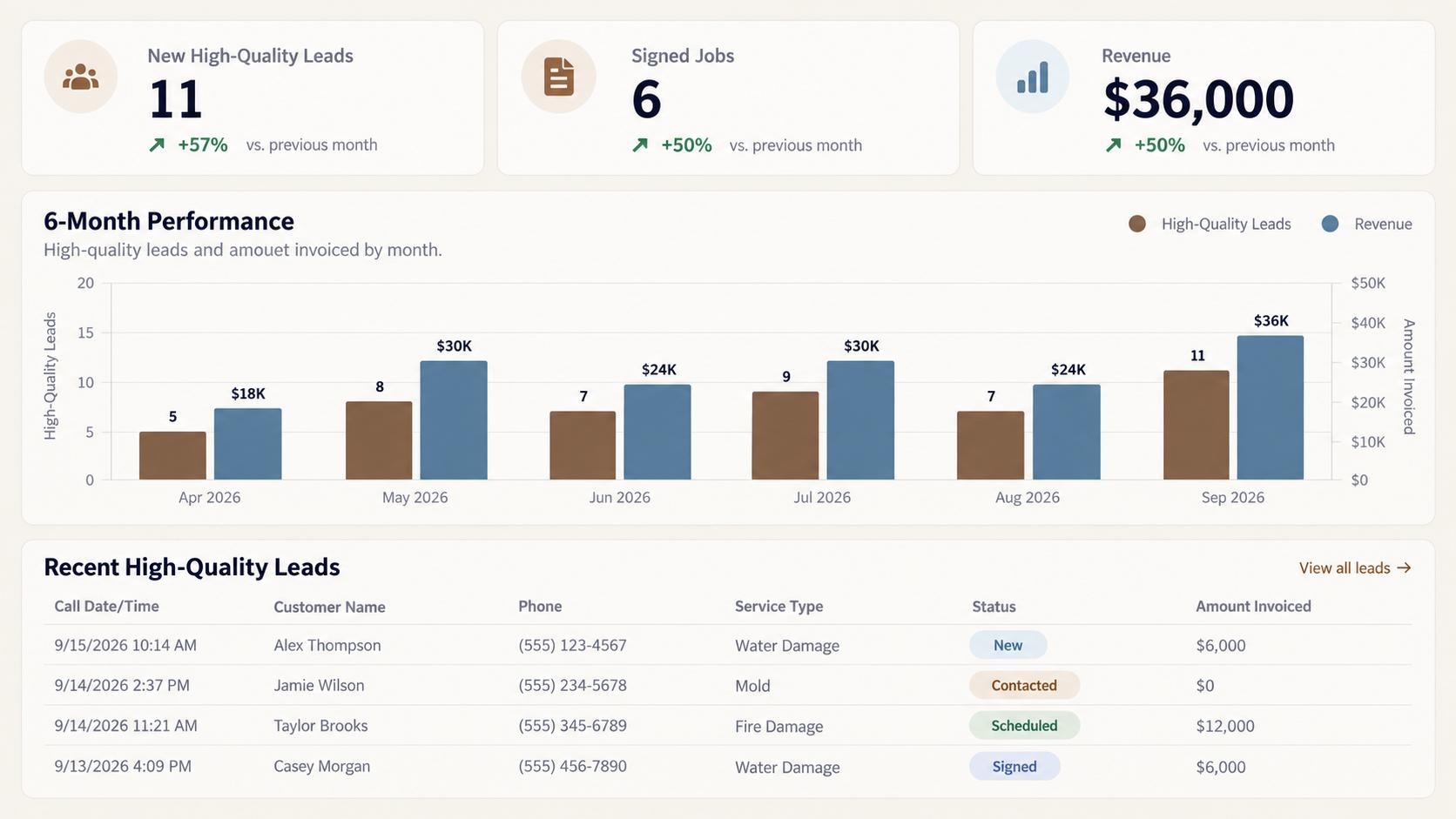
You can see how we apply this type of lead tracking in our Central Florida restoration case study.
A high-quality restoration lead
Is in your service area, needs a service you provide, and has a legitimate chance of becoming a job.
Marketing vs. Sales
A lead that doesn't close does not automatically mean the marketing failed
Say your marketing generated 20 legitimate restoration opportunities and your company closed five.
That does not necessarily mean marketing is broken. Marketing generated the opportunity. What happened afterward may point to problems with response time, communication, follow-up, estimating, sales, or internal procedures.
This is why I prefer measuring the entire funnel:
Look at rolling three-to-six-month trends rather than panicking over one unusually slow month. Restoration demand naturally moves with storms, flooding, weather, and normal business volatility.
The Foundation
What a strong restoration online presence looks like
No single tactic creates a strong online presence. It is the combination of multiple pieces reinforcing each other.
Before Spending More
Fix the leaks before buying more traffic
If you suddenly had another $2,000–$5,000 per month available for marketing, I would not automatically put it into ads.
Calls are answered quickly — including after normal business hours
The person answering the phone follows a consistent intake process
Every legitimate lead is entered into the CRM
Referral source is recorded consistently
Your team asks, “How did you hear about us?”
Legitimate opportunities are followed up on quickly
You can separate spam calls from actual restoration leads
You know roughly how many high-quality leads each channel produces
If the foundation is leaking, sending another 20 leads into the business may simply mean losing more leads.
The Bottom Line
Build the foundation before adding more traffic.
Strengthen your Google Business Profile, website, SEO, reviews, referrals, tracking, and intake process first. Then use Local Services Ads, third-party leads, and Google Ads to add volume on top of a system that already works.
The goal is not simply to generate more phone calls. It is to generate more legitimate restoration opportunities and build a business that knows where those opportunities came from.